NASA sets Terra's science cutoff for December 1 while keeping its archive open
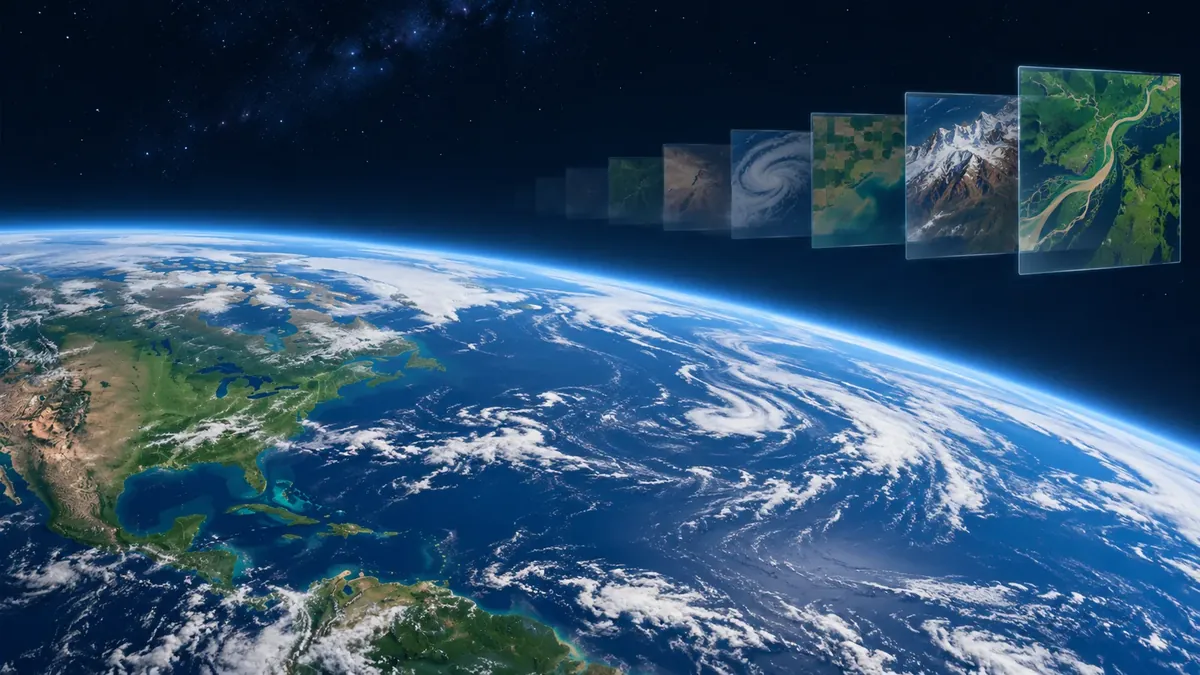
The Earth-observing satellite will stop collecting science data before a later shutdown of its systems. NASA says the existing record will remain freely available.
NASA announced on November 17 that Terra will stop collecting science data on December 1 after a mission lasting about 27 years. The agency attributes the end to aging spacecraft systems and a drifting orbit, after a mission originally designed to last six years.
The immediate consequence is an end to new observations from Terra, not the disappearance of everything it has measured. NASA says the mission's data records will remain free and publicly available. For readers who use satellite imagery to understand environmental change, that is the distinction to keep beside the shutdown date.
Science collection and shutdown have different dates
In its >mission announcement (opens in a new tab), NASA describes a staged decommissioning process. After science collection ends, the team plans to use remaining fuel to lower the spacecraft's orbit before switching off all systems in January 2027.
The announcement does not give an exact atmospheric reentry date. Lowering an orbit and turning off a spacecraft are separate steps, so neither should be presented as proof that Terra will fall out of orbit on December 1. The date NASA has specified for that day concerns science data collection.
A record that outlasts its observing platform
NASA says Terra has documented land-use change, wildfires, airborne dust and smoke, atmospheric composition and ice cover. The agency describes uses spanning public safety, farming and water resources. These are examples of the mission's applications, not a claim that one satellite alone supplies every dataset used in those fields.
An archive and a live observing stream answer different questions. Historical observations can still support comparisons and reanalysis after collection stops. They cannot provide a new observation from Terra after its cutoff. A reader checking an image or chart therefore needs the observation date, not just the date a website republished it.
The mission was already changing before the final cutoff
Terra carries five instruments. NASA says MOPITT, along with parts of CERES and ASTER, had already been switched off to conserve power. That means the final shutdown follows earlier changes in what the platform could collect; it is not a sudden loss of five uniformly operating instruments on the same day.
The agency's update does not claim that every Terra measurement will be replaced by an identical observation from another spacecraft. For anyone following a particular data product, the useful next question is which instrument produced it and what its archive documentation says about coverage. NASA's commitment to continued public access preserves the record, while the December cutoff marks the end of adding new Terra science to it.
 Felix Honigwachs