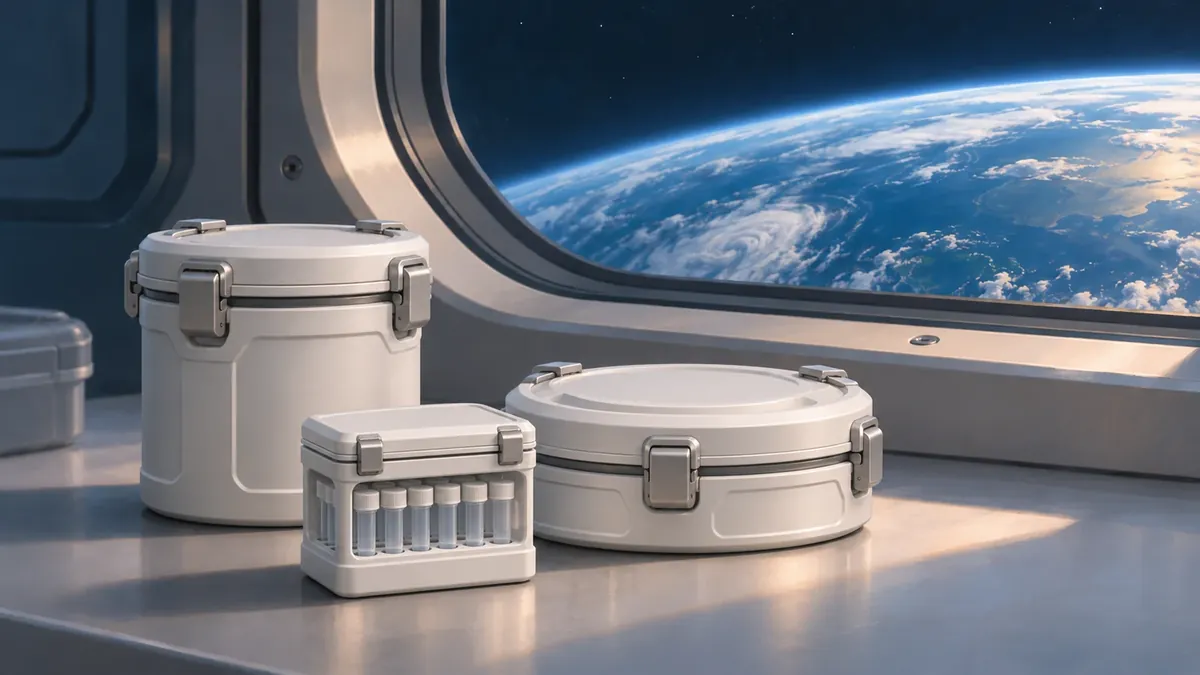
ISS crew tests compact diagnostics alongside microbial DNA and stem-cell work
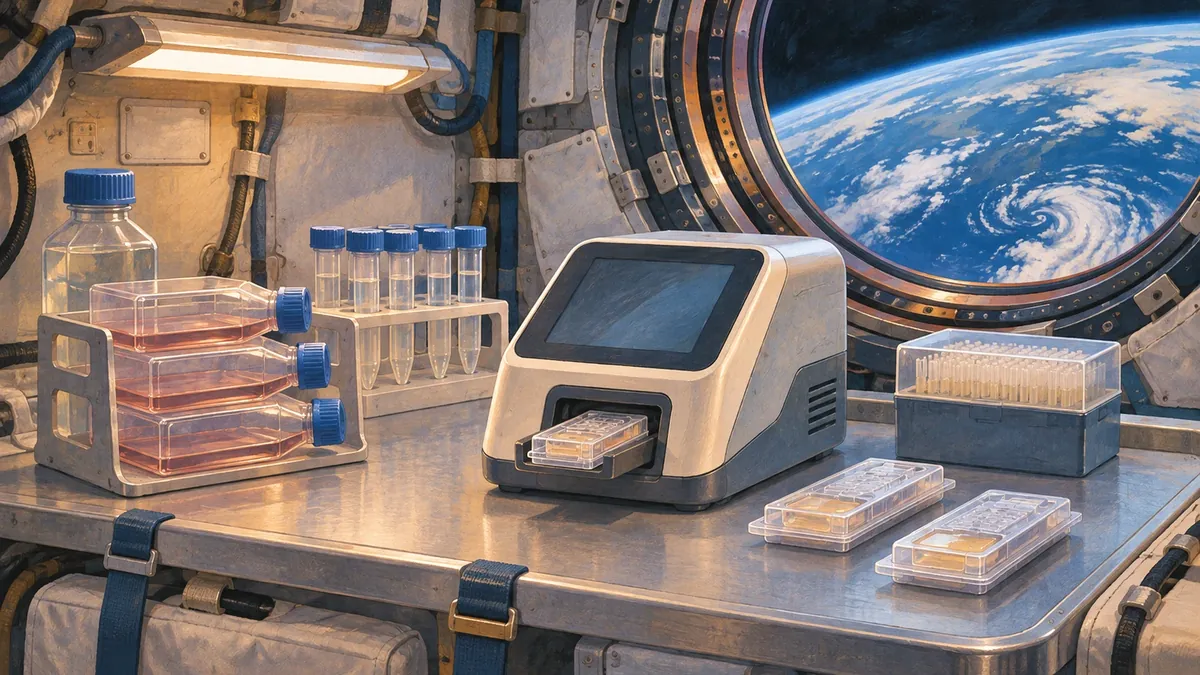
The International Space Station crew worked on portable blood analysis, microbial DNA preparation and stem-cell cultures on November 23, according to NASA's daily station update. The common question is practical: what can researchers reliably measure or produce in microgravity with equipment suited to spaceflight?
NASA described work in progress. It did not announce a new clinical treatment or completed medical findings.
A smaller laboratory for blood testing
Flight engineer Anil Menon analyzed blood samples for the Acute Care Testing in Space investigation. The experiment uses a portable diagnostic reader and disposable cartridges, examining whether such tools can detect possible blood conditions associated with spaceflight without complex biomedical equipment.
That focus matters for how the activity should be read. Operating a device aboard the station is a research step; it is not, by itself, proof that the system can replace a full clinical laboratory or diagnose every condition astronauts may face. The >NASA update (opens in a new tab) did not report diagnostic accuracy results.
DNA samples and cell production
Jessica Watkins prepared microbial DNA samples in the Harmony module for sequencing with a palm-sized device. Researchers are studying how microbes adapt to microgravity, including changes involving antibiotic-resistant bacteria that could affect crew health and spacecraft systems.
In the Kibo laboratory's Life Science Glovebox, Luke Delaney tended growing stem-cell samples for a demonstration of cell manufacturing in space. NASA described the longer-term aim as learning how to produce high-quality blood-forming cells from human stem cells away from Earth. Potential therapies remain a research objective, rather than an outcome established by Monday's work.
The three activities address different problems: identifying microbial changes, evaluating compact testing equipment and exploring cell production. Combining them into a single claim of a medical breakthrough would overstate what NASA reported.
Crew health research extends beyond the lab
NASA also reported that Canadian astronaut Joshua Kutryk performed rowing and resistance exercises on the European Enhanced Exploration Exercise Device in the Columbus module. The compact equipment is being studied for maintaining muscle and bone health on missions farther from Earth.
For these experiments, the next useful evidence will be analyzed results: how the tools performed, what changed in the samples and whether findings can be reproduced. The November 23 update documents the work needed to reach those answers, not the answers themselves.

 Felix Honigwachs